
Brazil Flag
Because of World War II, the World Cup had not been staged since 1938; the planned World Cups of 1942 and 1946 were both cancelled. After the war, FIFA were keen to resurrect the competition as soon as possible, and they began making plans for a World Cup tournament to take place. In the aftermath of the war, much of Europe lay in ruins. As a result, FIFA had difficulties finding a country interested in hosting the event, since many governments believed that their scarce resources ought to be devoted to more urgent priorities than a sporting tournament.
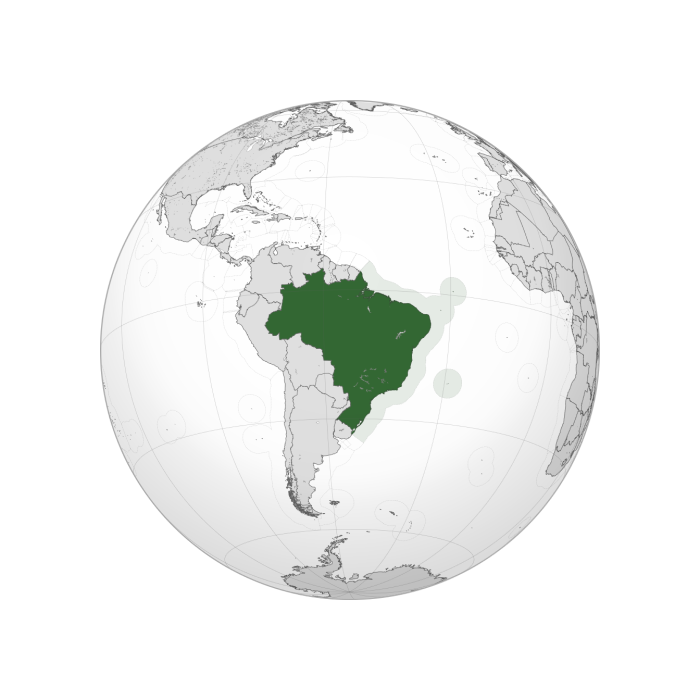
Brazil Location
The World Cup was at risk of not being held for sheer lack of interest from the international community, until Brazil presented a bid at the 1946 FIFA Congress, offering to host the event on condition that the tournament take place in 1950 rather than the originally proposed year of 1949. Brazil and Germany had been the leading bidders to host the cancelled 1942 World Cup; since both the 1934 and 1938 tournaments had been held in Europe, football historians generally agree that the 1942 event would have most likely been awarded to a South American host country. Brazil's new bid was very similar to the mooted 1942 bid and was quickly accepted.