
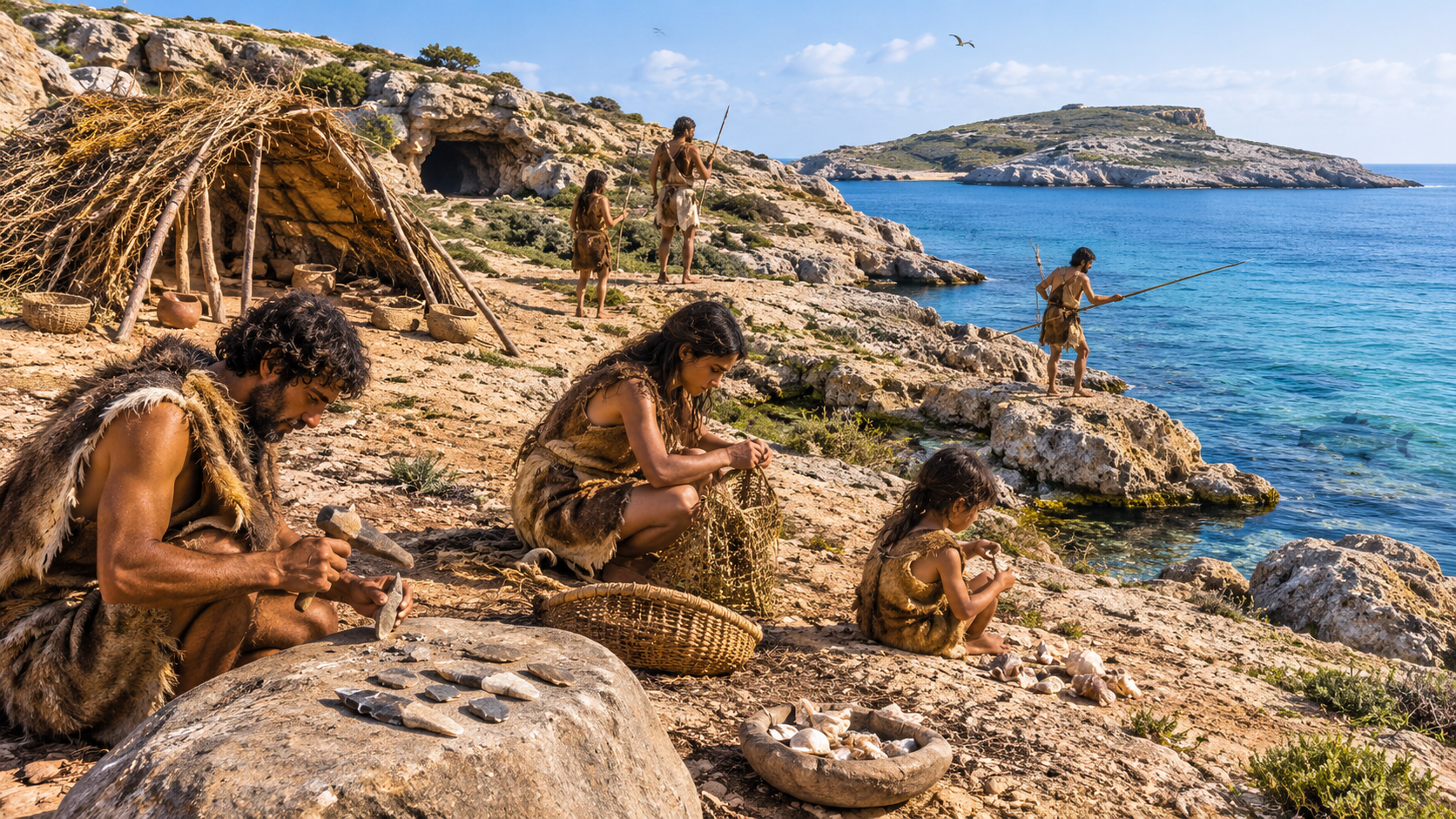
Mesolithic Period
6500–5400 BC
Represents the earliest confirmed chapter of human habitation on the archipelago, pushing Maltese prehistory back at least 1,000 years earlier than previously believed.
Malta has been inhabited from at least circa 6500 BC, with the arrival of Mesolithic hunter-gatherers likely originating from Sicily. Discoveries at Latnija Cave led by the Maltese archaeologist Eleanor Scerri included the remains of hearths, stone tools and an abundant and diverse range of animal bones. These included indigenous red deer that are now extinct, fish and marine mammals, as well as abundant edible marine gastropods. To arrive on Malta, these hunter-gatherers had to cross around 100 km of open water, documenting the longest yet-known sea crossing by hunter-gatherers in the Mediterranean. The extinction of the dwarf hippos, giant swans and dwarf elephants has historically been linked to the earliest arrival of humans on Malta. However this seems unlikely since recent work suggests these animals went extinct many thousands of years before the arrival of the first people, and no such animals were found in association with the earliest known Mesolithic hunter-gatherers.