
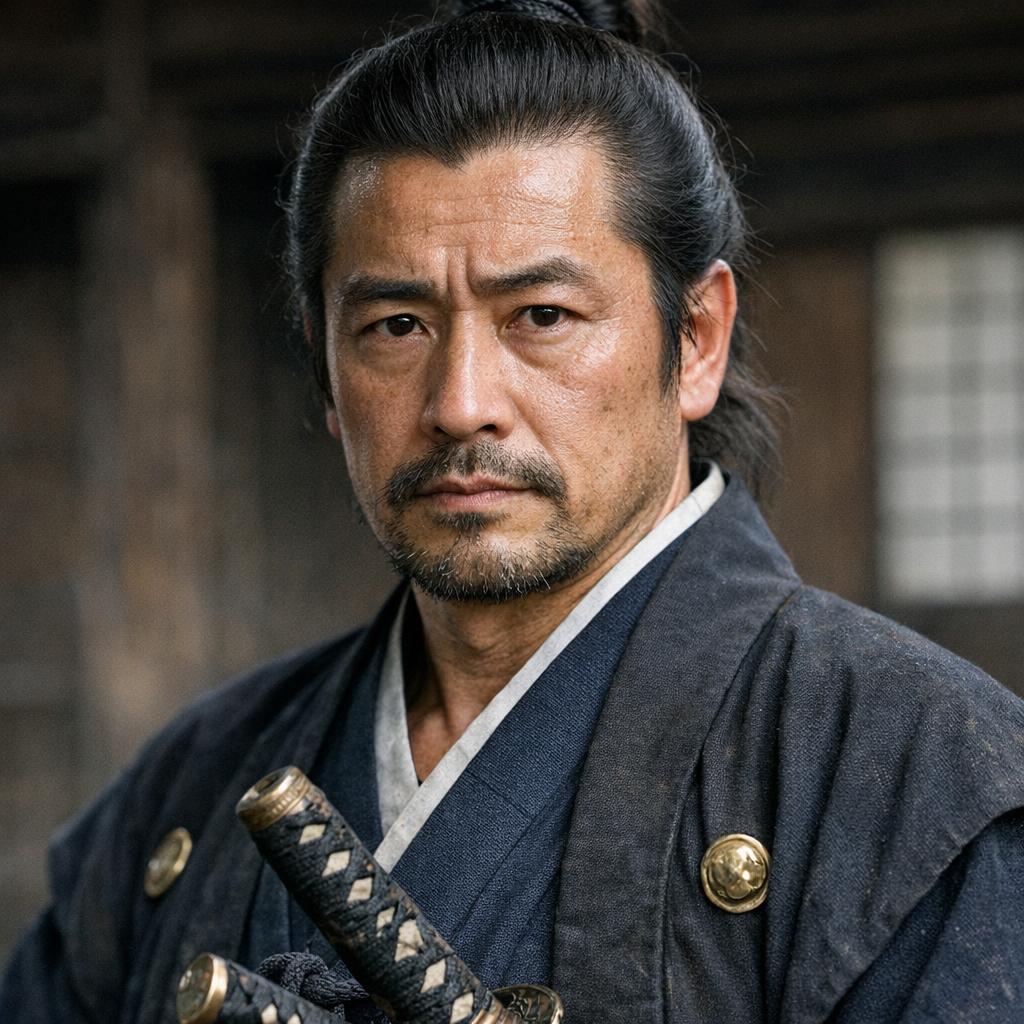
Kondō Isami
Born: November 9, 1834
Known for: Japanese samurai and the commander of the Shinsengumi, a special police force that supported the Tokugawa shogunate during the turbulent final years of the Edo period.
Died: May 17, 1868
Age: 33
Allegiance: Tokugawa Shogunate; Commander of the Shinsengumi
Conflicts: Kinmon Incident (1864) in Kyoto; Clashes during the Boshin War (1868–1869)
Cause of Death: Decapitation
Resting Place: body: Ryugenji Temple, Osawa, Mitaka, Tokyo, Japan; head: Hozoji Temple, Okazaki, Aichi Prefecture, Japan
Spouses: Matsui Tsune
Kondō Isami (近藤 勇; November 9, 1834 – May 17, 1868) was a Japanese swordsman and samurai of the late Edo period. He was the fourth generation master of Tennen Rishin-ryū and was famed for his role as commander of the Shinsengumi.
He was born Miyagawa Katsugorō to a farmer Miyagawa Hisajirō and his wife Miyo in Kami-Ishihara village in Musashi Province (present city of Chōfu) in Western Tokyo on November 9, 1834. He had two older brothers, Otojirō (音次郎; later known as Otogorō 音五郎) and Kumezō (粂蔵; later known as Sōbei 惣兵衛) and an older sister Rie (リエ), who died two years before he was born. Katsugorō began training at the Shieikan (the main dojo of the Tennen Rishin-ryū) in 1848.
As a young man he was said to be an avid reader, and especially liked the stories of the Forty-seven rōnin and the Romance of the Three Kingdoms. His renown as a scholar and his fame at having defeated a group of thieves who tried to break into his family home was great, and caught the attention of Kondō Shūsuke, the third generation master of the Tennen Rishin-ryū. Shūsuke wasted no time in adopting the young Katsugorō in 1849, who first took the name of Shimazaki Katsuta (島崎勝太). According to a record in the possession of the former Gozu-tennōsha Shrine 牛頭天王社 (now the Hino Yasaka-jinja Shrine 日野八坂神社), Katsuta is listed, with full common name and formal name, as Shimazaki Isami Fujiwara (no) Yoshitake (島崎勇藤原義武), and thus, had the name Isami (勇) as of 1858, the document's date.
Kondō was said to have owned a katana called "Kotetsu" (虎徹), the work of the 17th century swordsmith Nagasone Kotetsu. However, the authenticity of his "Kotetsu" is highly debatable. According to Yasu Kizu's pamphlet on the swordmaker Kotetsu, Kondō's sword may actually have been made by Minamoto no Kiyomaro, a swordmaker of high repute roughly contemporary to Kondō.
Kondō married Matsui Tsune in 1860. This was an advantageous match for Kondō as Otsune was the daughter of Matsui Yasogorō (松井八十五郎), a retainer to the Shimizu-Tokugawa clan. On September 30, 1861, Isami became the fourth generation master (sōke no yondai me 宗家四代目) of Tennen Rishin-ryū, assuming the name Kondō Isami and taking charge of the Shieikan. A year later, his daughter Kondō Tama (1862–1886) was born.
Although he was never employed by the Shogunate before his Shinsengumi days, Kondō was a candidate for a teaching position at the Kōbusho in 1862. The Kobusho was an exclusive military training school, primarily for the use of the shogunal retainers, set up by the Shogunate in 1855 in order to reform the military system after the arrival of Perry's Black Ships.