
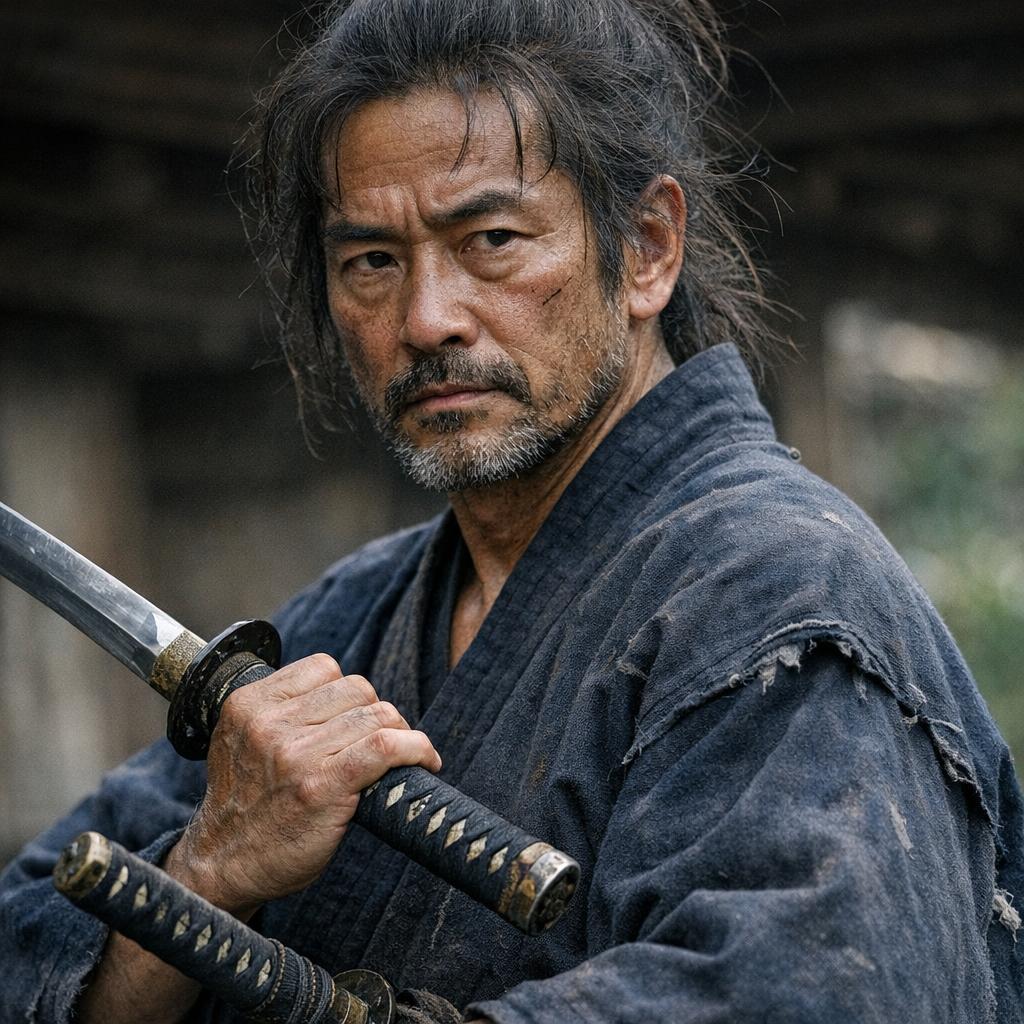
Miyamoto Musashi
Born: c.1583
Known for: Renowned through stories of his unique double-bladed swordsmanship.
Died: 13 June 1645
Age: 61–62
Allegiance: Rōnin (masterless samurai); Later served various lords, including the Hosokawa clan.
Conflicts: Duel with Sasaki Kojiro (1612) at Ganryū Island; Participation in the Battle of Sekigahara (1600); Siege of Osaka (1614–1615)
Cause of Death: Died of natural causes, most commonly thought to be thoracic cancer (possibly lung or chest-related cancer).
Resting Place: Musashi Tsuka
Spouses: not known to have had any spouses.
Miyamoto Musashi (宮本 武蔵; c. 1583 – 13 June 1645) was a Japanese swordsman, strategist, artist, and writer who became renowned through stories of his unique double-bladed swordsmanship and undefeated record in his 62 duels. Musashi is considered a kensei (sword saint) of Japan. He was the founder of the Niten Ichi-ryū (or Nito Ichi-ryū) style of swordsmanship. In his final years, Musashi authored The Book of Five Rings (五輪の書, Go Rin No Sho) and Dokkōdō (獨行道, The Path of Aloneness).
Both documents were bequeathed to Terao Magonojō, Musashi's most important student, seven days before Musashi's death. The Book of Five Rings focuses on the character of his Niten Ichi-ryū school in a concrete sense; his own practical martial art and its generic significance. On the other hand, The Path of Aloneness deals with the ideas that lie behind it, as well as his life's philosophy in a few short aphoristic sentences.
It is believed that Musashi was a friend of Mizuno Katsunari, a Tokugawa shogunate general. As part of the Tokugawa Army, they fought together in the Battle of Sekigahara, Siege of Osaka, and Shimabara Rebellion .
The Miyamoto Musashi Budokan training center in Ōhara-chō (Mimasaka), Okayama Prefecture, Japan, was erected in his honour.