
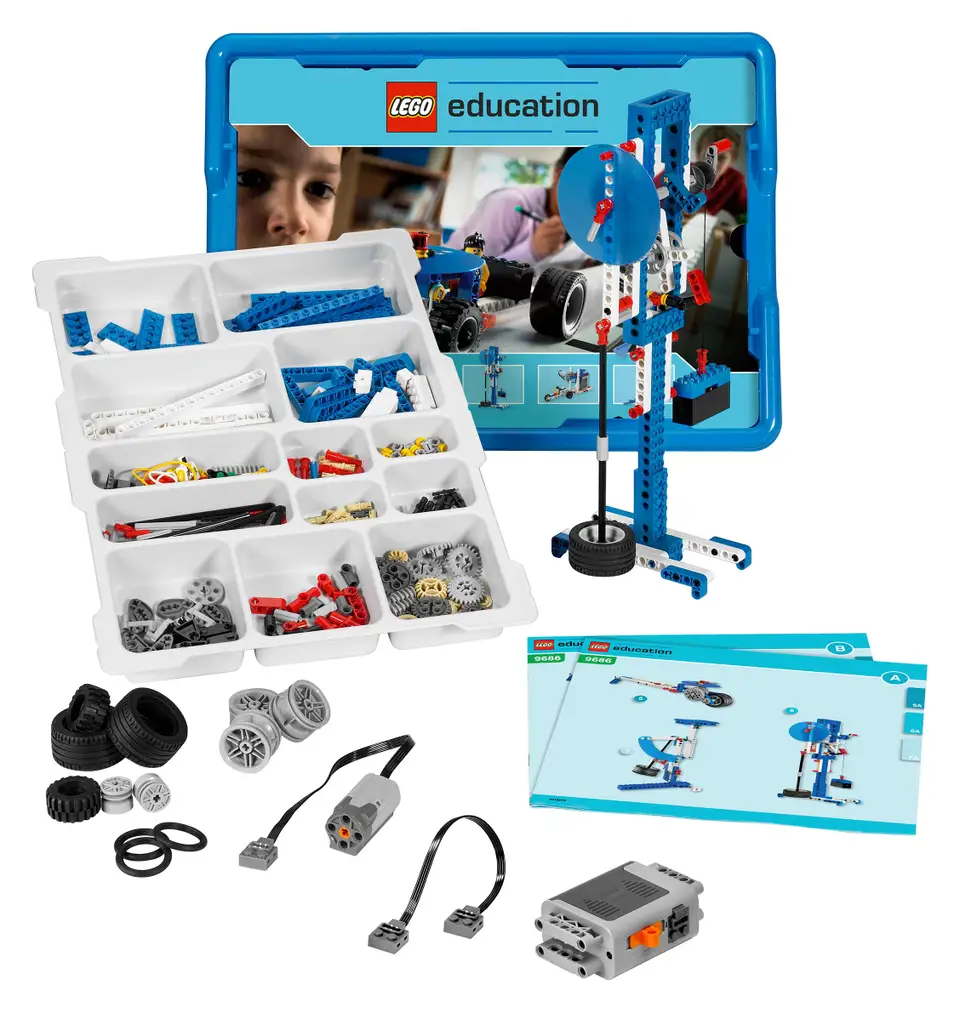
LEGO Education
1980
In 1980, LEGO formally established its educational outreach by founding the LEGO Institutional Department (later renamed LEGO Dacta and eventually LEGO Education). This division was created to focus specifically on developing LEGO products and curriculum materials designed for use in pre-school, elementary, and middle school classrooms.
Focus on Learning Through Play
The creation of the educational department was driven by the LEGO Group's belief in the potential of the LEGO brick as a learning material, beyond just a toy. The goal was to provide hands-on learning experiences that integrated subjects like math, science, and engineering (STEAM) into classroom activities.
Key Products and Initiatives
While early products in 1980 primarily focused on general pre-school materials using standard or DUPLO bricks, the division quickly expanded its offerings in the subsequent years.
1980 Products: The initial sets in 1980 were largely basic and DUPLO brick assortments, intended to be used with accompanying teacher's guides and student manuals that were developed to align with national and international curricula.
LEGO Technic Integration: A major development followed in 1982 with the introduction of LEGO Technic I (Item No. 1030) as the first product specifically for elementary and middle schools, allowing students to explore concepts like simple machines, gears, and physics.
Early Robotics/Coding: A pivotal moment for LEGO Education came later in the decade with collaborations with MIT Professor Seymour Papert, which led to experiments in combining LEGO building with the LOGO programming language. This research ultimately paved the way for future programmable products like LEGO Mindstorms in the late 1990s.
Overall, the 1980 initiative established the foundation for LEGO's formal role in global education, providing a structured approach to play-based learning.