
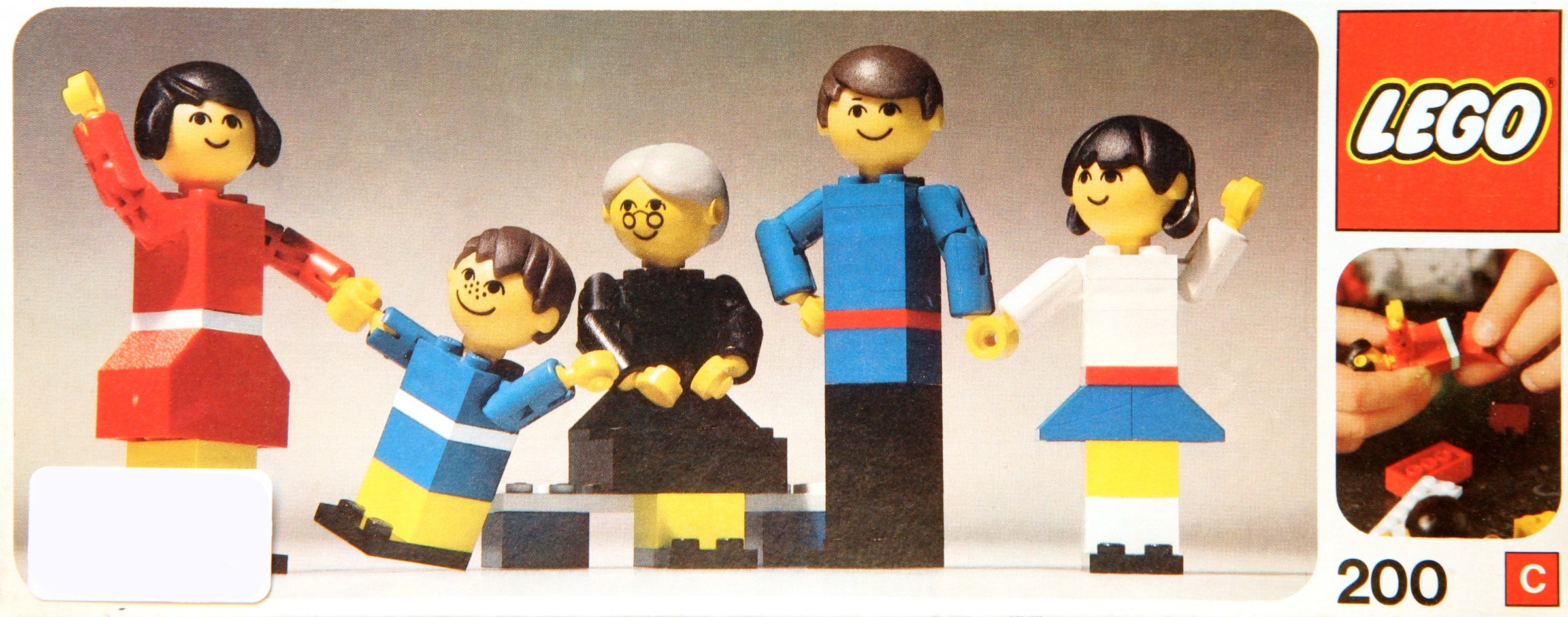
LEGO Figures
1974
In 1974, the LEGO Group introduced its very first figures designed to interact with the broader LEGO System sets, a major milestone in the company's history. These early figures were significantly different from the modern minifigure.
"Homemaker" Figures (1974)
These figures, which collectors now call "Homemaker" figures (or sometimes "Pre-Minifigs" or "Maxifigs"), were a response to the need for characters to populate the LEGO houses and domestic sets of the time.
Design: The figures were large, brick-built characters made of solid blocks of plastic for the body and legs. The torso and head pieces were specialized molded parts that could not be taken apart.
Scale: They were much larger than the later minifigure, standing around 2.5 inches (6.4 cm) tall.
Articulation: They had limited articulation; their arms could swing up and down, and the hands (which looked like standard LEGO C-shaped hands) could swivel.
Lack of Minifigure Features: They did not have the ability to sit, nor did they use the "stud-and-tube" connection system to attach to standard LEGO studs like modern figures. They were simply placed next to or inside vehicles and buildings.
Appearance: They featured simple, molded faces (sometimes just black dots for eyes) and came in various roles such as mothers, fathers, police officers, and doctors.
Key Sets Featuring the 1974 Figures
These figures were integrated into several "LEGOLAND" themed sets, primarily those focused on domestic and town life:
LEGO Set 200/203/205 Homemaker Sets: A series of simple sets that included one figure and basic furniture or a vehicle.
LEGO Set 540 "Furniture with 2 Figures": One of the core sets that introduced these figures to the North American market.
LEGO Set 560 "Family Car": This set included two figures and a simple car designed to fit them.
The Homemaker figures remained in production until 1982, coexisting with the much more popular modern minifigure, which was introduced in 1978 and eventually replaced them entirely.