
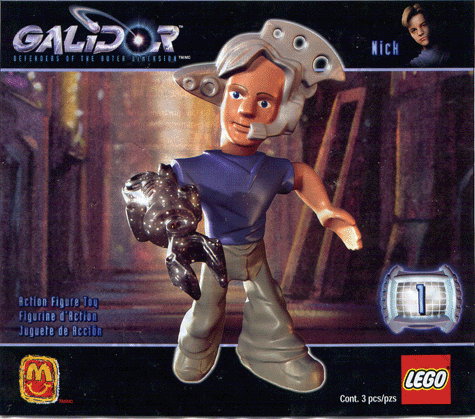
LEGO Galidor
2002
LEGO Galidor was a short-lived, discontinued theme from 2002 to 2003 that centered on customizable action figures and a tie-in television series. It is widely considered one of The LEGO Group's biggest commercial failures because it completely departed from the traditional brick-building system.
Theme Overview and Storyline
The theme was a joint venture between The LEGO Group and a TV production company, designed to capture a new market. The accompanying TV series, Galidor: Defenders of the Outer Dimension, aired on Fox Kids and other networks and was partially funded by LEGO.
The story followed teenager Nick Bluetooth, who is transported to the "Outer Dimension". Using an ability called "glinching", Nick could transform his limbs into the body parts and weapons of creatures and objects he encountered. The toy line was designed to mimic this ability, allowing users to swap the limbs and parts of the action figures.
Toy Line Details
The Galidor toy line did away with traditional LEGO bricks in favor of highly specialized, large action figure pieces with unique hinge mechanisms.
Customizable Action Figures: The figures were the core of the line, allowing for extensive customization and realistic movement. A key selling point was the "interchangeable" nature of all parts.
Specialized Pieces: The pieces were so specialized that they had little use outside of the Galidor theme, which alienated many core LEGO fans who valued system compatibility and creative building.
Electronic Features: One figure, the Kek Powerizer, included built-in video games and would make sounds when receiving signals from the television show as it aired.
Happy Meal Tie-ins: Five smaller versions of the figures were also available as Happy Meal toys from McDonald's.
Legacy
Due to poor reception and high production costs, the Galidor line contributed to The LEGO Group's significant financial troubles in the early 2000s. The theme was quickly canceled, and the company shifted its strategy back toward traditional brick-based sets and successful licensed themes like LEGO Star Wars and Bionicle, a move credited with saving the company from bankruptcy. While considered a failure at the time, the figures have gained a small cult following among some collectors.