
LEGO Minifigure
1978
The modern LEGO Minifigure was first introduced in 1978, a breakthrough in the company's history that added life and role-play possibilities to the existing building system. Designed by Jens Nygaard Knudsen, the figures featured movable limbs and a simple, universal facial expression.
Features of the 1978 Minifigure
The original minifigures had a simple, iconic design that allowed children to project their imagination onto the characters.
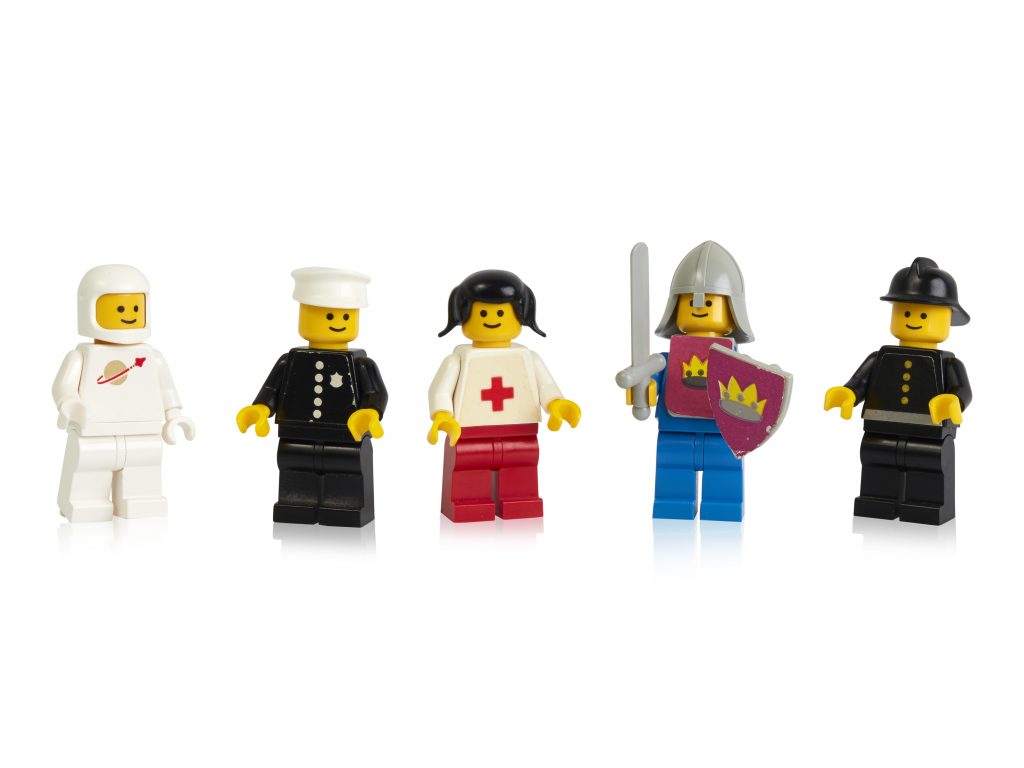
Design: The figures were exactly four LEGO bricks high (without a headpiece) and made up of interchangeable parts: head, torso, arms with C-shaped hands, and legs that could move.
Face: All figures shared a generic, smiling face with two black dots for eyes and a painted black smile, designed to be gender and racially neutral so a child's imagination could determine the character's specifics.
Accessories: The C-shaped hands allowed the figures to hold various LEGO accessories and tools, adding to the playability.
Themes: The 1978 minifigures were introduced across the new Town, Castle, and Space themes. Notable 1978 Minifigures and Sets
The very first set to contain a modern minifigure was the LEGO Set 600 Police Patrol, which included a simple police car and an officer minifigure. Other sets quickly followed:
Police Officer: The first ever minifigure, featuring a white hat and a black uniform.
Astronauts: Included in the Classic Space sets like the LEGO LL928 Galaxy Explorer, wearing white space suits and helmets.
Knights: Found in the debut Castle sets, such as the iconic LEGO 375 Castle (also known as the Yellow Castle).
Townspeople: Including the figures in the LEGO 374 Fire Station set, populating the new Town environments.