
U.S. Senate has approved a war powers resolution aimed at ending unauthorized U.S. military involvement against Iran
2026, June 24
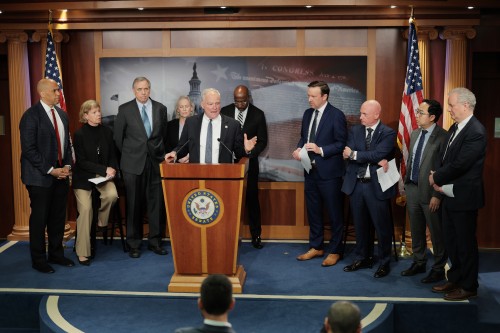
U.S. Senate has approved a war powers resolution aimed at ending unauthorized U.S. military involvement against Iran
2026, June 24
United States
The U.S. Senate has approved a war powers resolution aimed at ending unauthorized U.S. military involvement against Iran, marking the first time since the 1973 War Powers Act that both chambers of Congress have passed such a measure directing a president to halt hostilities. The Senate approved it by a narrow 50–48 vote.The vote is being widely viewed as a significant bipartisan rebuke to President Donald Trump. Four Republican senators joined most Democrats in supporting the resolution, while Democratic Senator John Fetterman voted against it.
The resolution stems from concerns that the administration entered the Iran conflict without explicit congressional authorization. Supporters argue that the U.S. Constitution gives Congress, not the president, the power to declare war, and that military action should require legislative approval.
However, the practical impact may be limited. The White House has dismissed the vote as largely symbolic, arguing that active hostilities have already ended under the current ceasefire arrangements. Legal experts note that the constitutionality and enforceability of War Powers Act resolutions have long been disputed, meaning the courts could ultimately determine whether Congress can compel a president to end military operations in this way.
The vote nevertheless highlights growing unease in Congress over the Iran conflict and signals that support for Trump's foreign policy is no longer as unified within his own party as it was earlier in his term.