
Ukraine's sustained drone campaign against Russian oil infrastructure is disrupting Russia's domestic fuel supplies far beyond the front lines.
2026, June 30
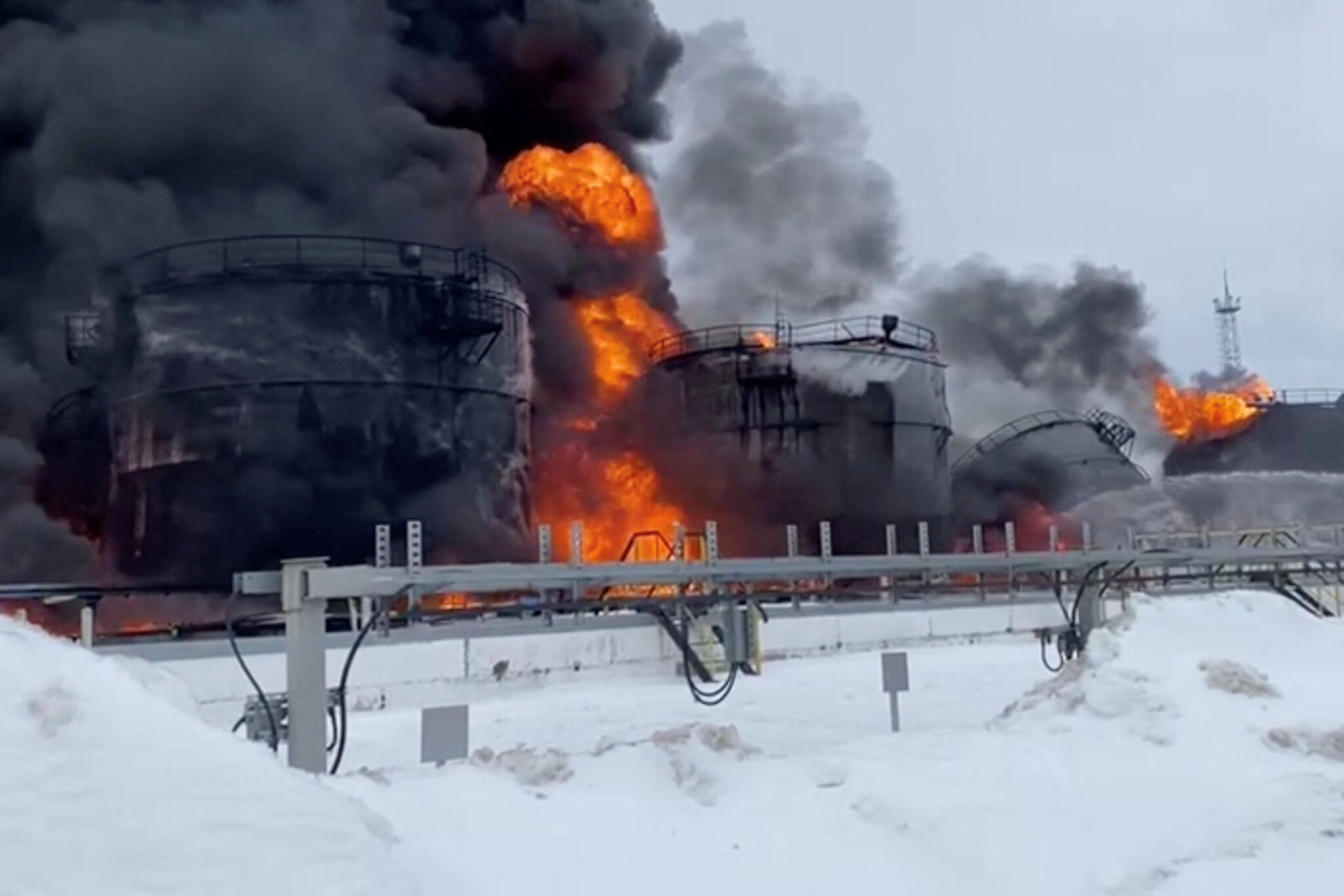
Ukraine's sustained drone campaign against Russian oil infrastructure is disrupting Russia's domestic fuel supplies far beyond the front lines.
2026, June 30
Russia
Ukraine's sustained drone campaign against Russian oil infrastructure has developed into one of its most strategically significant operations of the war, with mounting evidence that it is disrupting Russia's domestic fuel supplies far beyond the front lines.According to reporting:
Since late March, Ukraine has carried out more than 50 attacks on Russian oil refineries, fuel depots, and export terminals.
Russia's refined oil output has reportedly fallen by about 25%, while gasoline production is down roughly 17% compared with a year ago.
Fuel shortages have spread to more than half of Russia's regions, leading to rationing, long queues at petrol stations, and rising prices. Even areas thousands of kilometres from Ukraine, including parts of Siberia, have been affected because of nationwide supply and transport disruptions.
One of the biggest blows has been damage to the Moscow Oil Refinery, which supplies around 40% of the capital's fuel. Industry sources say repairs could take many months because sanctions have made it difficult to obtain specialized foreign-made equipment.
Russian President Vladimir Putin has acknowledged fuel shortages but described them as temporary. The government is considering measures such as restricting fuel exports, redistributing supplies across the country, and even importing fuel to stabilize the market.
For Ukraine, the strategy serves two purposes:
It reduces Russia's capacity to refine fuel used by both the civilian economy and the military.
It forces Russia to devote more air defenses and resources to protecting infrastructure deep inside its own territory, increasing the cost of continuing the war.
Energy analysts say the shortages could persist throughout the summer, particularly as seasonal demand from agriculture and holiday travel increases, making this one of the most consequential economic impacts of Ukraine's long-range drone campaign to date.