
U.S. Army has used 'virtually all' of its stockpile of two key types of land-based long-range precision missiles
2026, August 4
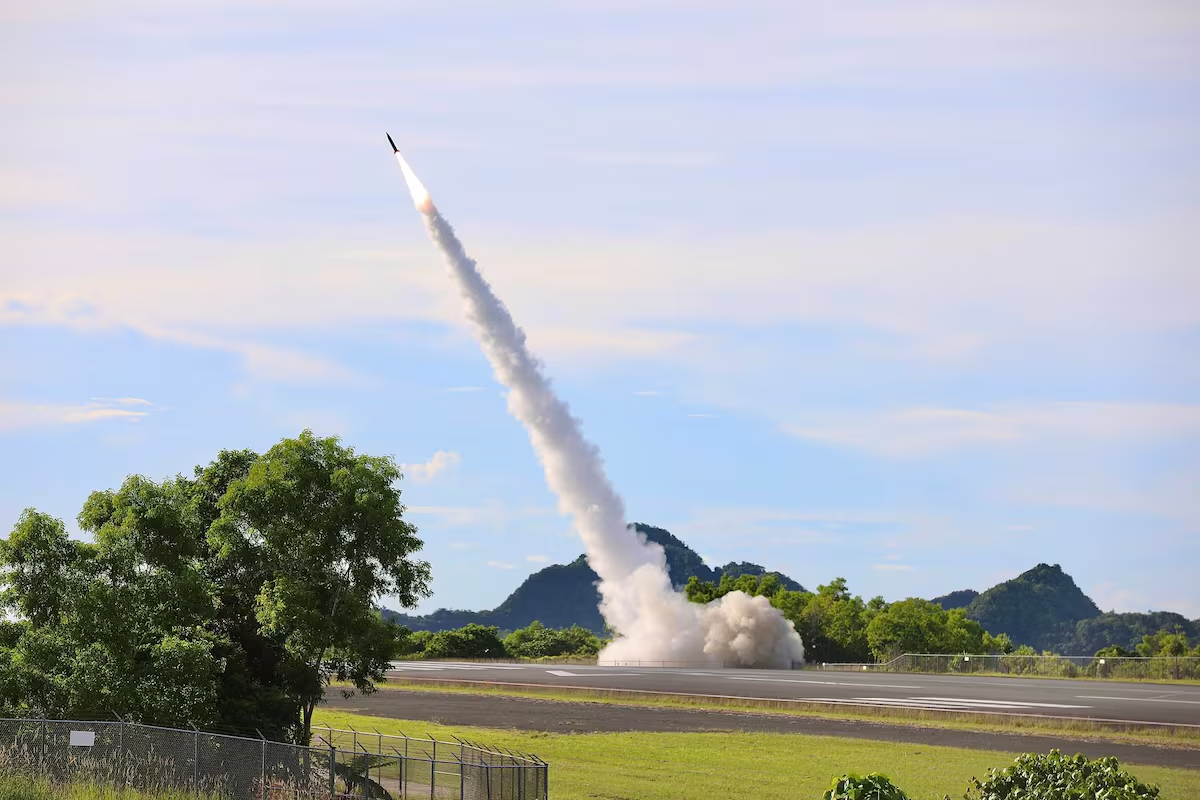
U.S. Army has used 'virtually all' of its stockpile of two key types of land-based long-range precision missiles
2026, August 4
United States
According to a Reuters report published on August 4, the U.S. Army has used 'virtually all' of its stockpile of two key types of land-based long-range precision missiles during the five-month war with Iran, according to three anonymous sources familiar with the data.The report refers specifically to:
ATACMS (Army Tactical Missile System) – a long-range surface-to-surface missile used to strike high-value targets.
Precision Strike Missile (PrSM) – the Army's newer, longer-range successor to ATACMS.
The same sources said the heavy use of these weapons has raised concerns within the Pentagon about U.S. preparedness for a potential future conflict with another major military power, particularly China or Russia. Officials are also reportedly worried about declining stocks of other advanced munitions, including:
Patriot air-defense interceptors,
THAAD interceptors, and
roughly half of the Navy's Tomahawk cruise missiles.
However, U.S. officials have pushed back against suggestions that the military is unable to defend itself. The Pentagon has stated that:
the U.S. military remains fully capable of meeting its global commitments,
munitions are being redistributed from other regions where necessary, and
production of key missile systems is being accelerated to replenish inventories.
The report has also reignited debate in Washington over whether the U.S. defense industrial base can produce advanced precision weapons quickly enough during a prolonged, high-intensity conflict. Analysts have warned for several years that replenishing stocks of sophisticated missiles can take months or even years, depending on the weapon and manufacturing capacity.
It's worth noting that the exact size of U.S. missile stockpiles is classified. Reuters' report is based on unnamed sources familiar with internal military data, while the Pentagon has not publicly confirmed the specific claim that 'virtually all' of these missile inventories have been expended.