
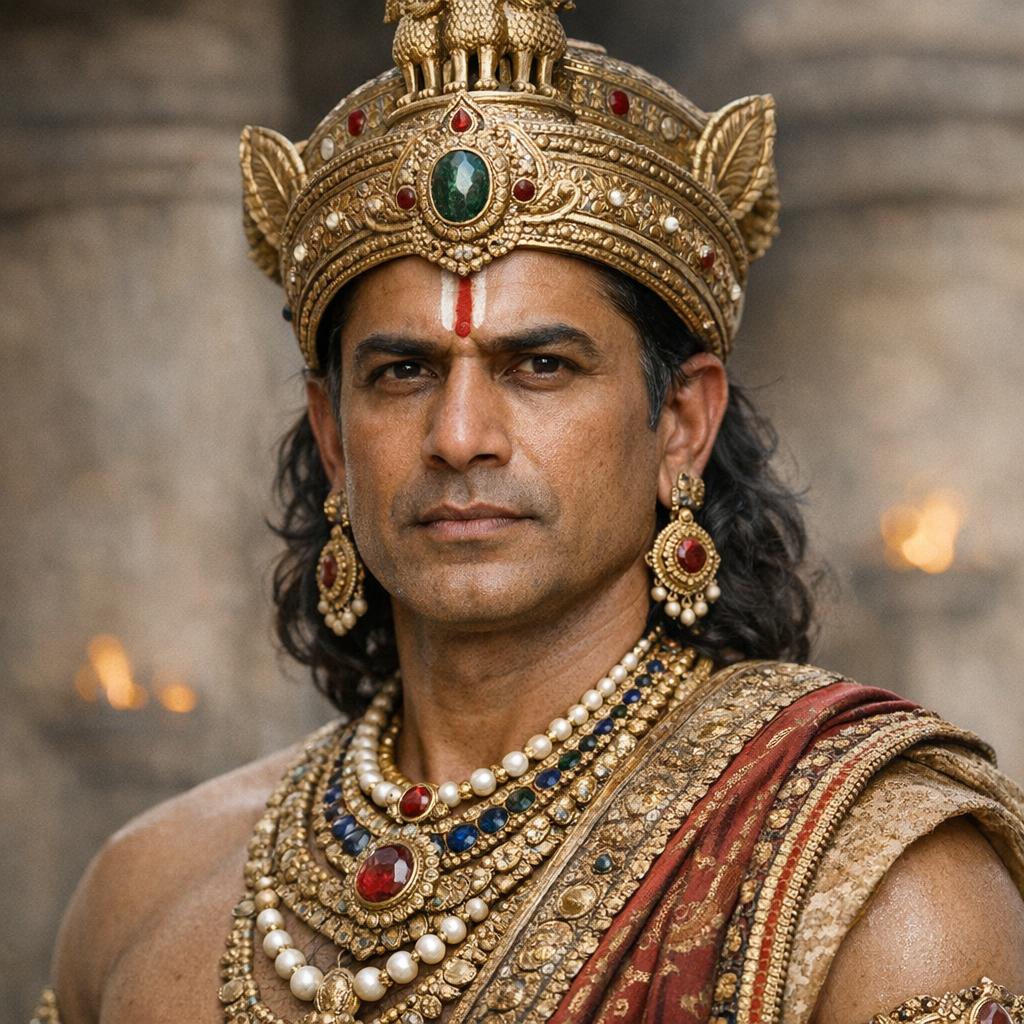
Ashoka the Great
Born: c. 304 BC
Known for: Emperor of Magadha
Died: 232 BC
Age: 72
Allegiance: Maurya Empire; Dynastic and administrative loyalty to the Mauryan state
Conflicts: Succession Crisis and Civil War (c. 272–268 BCE)
The Kalinga War (c. 261 BCE)
Cause of Death: According to the Ashokavadana, the emperor fell severely ill during his last days.
Resting Place: There is no known physical resting place or tomb for Ashoka the Great, as historical records indicate that his body was cremated according to Hindu and Buddhist traditions of the time. While his life and works are extensively documented through his Edicts, the location where his remains were interred or dispersed remains one of history's great mysteries.
Spouses: Devi (Sri Lankan tradition)
Karuvaki (own inscriptions)
Padmavati (North Indian tradition)
Asandhimitra (Sri Lankan tradition)
Tishyaraksha (Sri Lankan and North Indian tradition)Ashoka, also known as Asoka or Aśoka ([c. 304 – 232 BCE), most commonly known as Ashoka the Great, was Emperor of Magadha from c. 268 BCE until his death, and the third ruler from the Mauryan dynasty. His empire covered a large part of the Indian subcontinent, stretching from present-day Afghanistan in the west to present-day Bangladesh in the east, with its capital at Pataliputra. A patron of Buddhism, he is credited with an important role in the spread of Buddhism across ancient Asia.
The Edicts of Ashoka state that during his eighth regnal year (c. 260 BCE), he conquered Kalinga after a brutal war. Ashoka subsequently devoted himself to the propagation of "dhamma" or righteous conduct, the major theme of the edicts. Ashoka's edicts suggest that a few years after the Kalinga War, he was gradually drawn towards Buddhism. The Buddhist legends credit Ashoka with establishing a large number of stupas, patronising the Third Buddhist council, supporting Buddhist missionaries, and making generous donations to the sangha.
Ashoka's existence as a historical emperor had almost been forgotten, but since the decipherment in the 19th century of sources written in the Brahmi script, Ashoka holds a reputation as one of the greatest Indian emperors. The State Emblem of the modern Republic of India is an adaptation of the Lion Capital of Ashoka. Ashoka's wheel, the Ashoka Chakra, is adopted at the centre of the National Flag of India.